An Introduction to Single Cell ICP-MS Analysis

11 May 2017

The introduction and development of Single Particle ICP-MS (SP-ICP-MS) has opened a new area of research which allows the rapid detection and analysis of metal-based particles in a variety of matrices and applications.1-6 The key feature of SP-ICP-MS is that it allows discrete pulses of positively charged ions to be detected and measured in a time-resolved manner using microsecond (µs) data acquisition rates. This advance in data acquisition capabilities is opening up a number of new application areas. In this white paper, Perkin Elmer introduces the concept of Single Cell ICP-MS (SC-ICP-MS), where individual cells are rapidly analyzed for metal content.

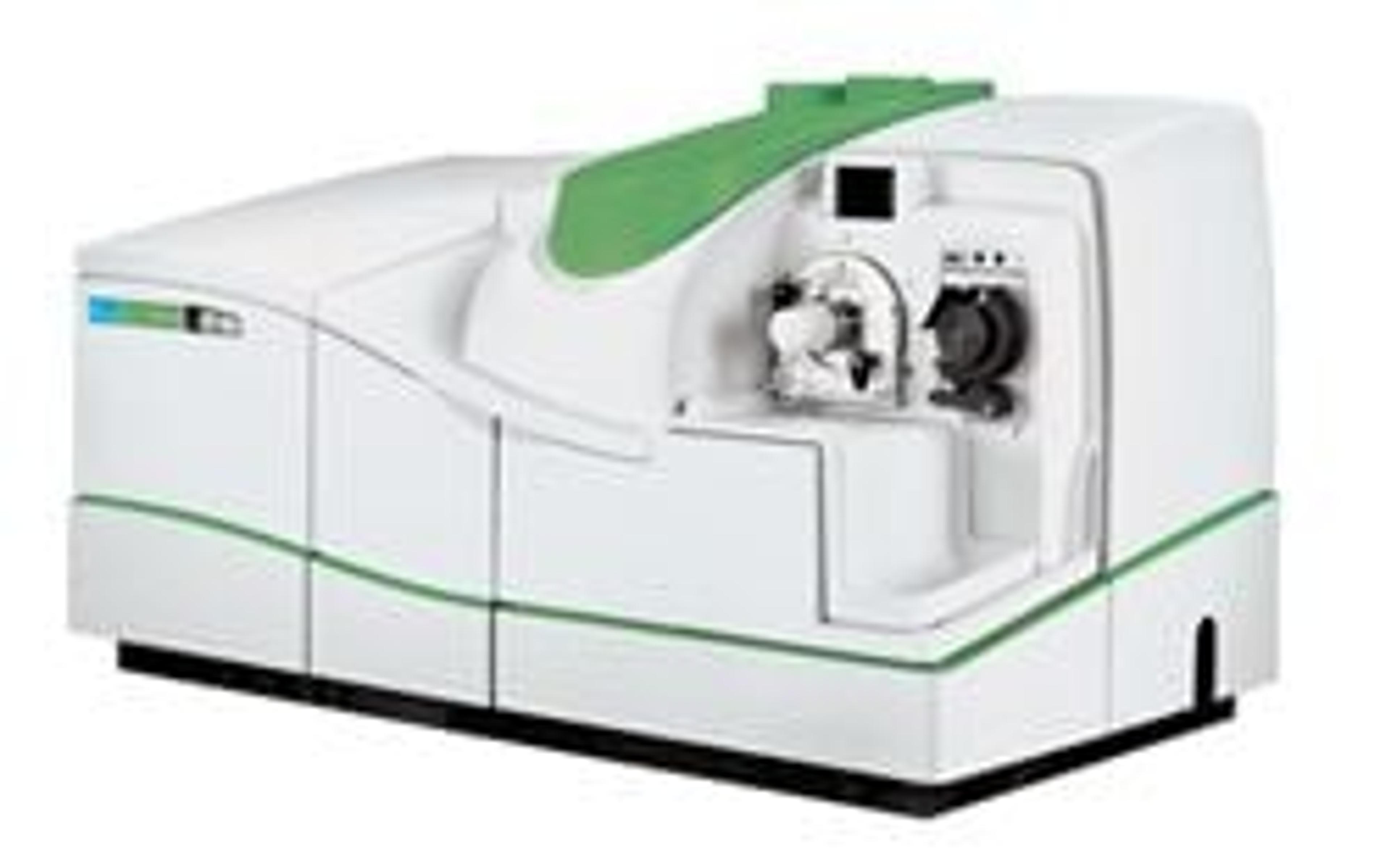
NexION 350 ICP-MS Spectrometers

PerkinElmer

When your instrument is more efficient and productive, so too are your scientists and your lab. And nothing puts the flow in your workflow better than the NexION® 350 ICP-MS. With a data acquisition speed 10 times faster than any other ICP-MS on the market, the new NexION 350 ICP-MS opens up a whole new world of efficiency and opportunity, allowing you to measure more in less time, and accurately characterize nanoparticles. In addition to the exceptional application flexibility afforded by its speed, the instrument also delivers superior uptime and productivity through a variety of unique features engineered to enhance signal stability: Triple Cone Interface produces the industry’s most tightly focused ion beam and prevents sample deposition on internal components. Quadrupole Ion Deflector turns positively charged ions 90° into the Universal Cell and filters off neutrals. Analyzing Quadrupole made of a unique steel alloy for negligible thermal expansion for unparalleled stability. No extraction lenses to clean for minimized maintenance.

(22)

Links

Tags

Mass SpectrometryMass spectrometry (MS) is a powerful analytical technique used to identify and quantify molecules based on the mass-to-charge ratio of gas-phase ions. It provides detailed information about the structure, composition, and properties of compounds and is widely used across fields such as environmental monitoring, materials science, drug discovery and development, food and beverage testing, and wider chemical research. Key MS techniques include tandem mass spectrometry (MS/MS), liquid chromatography–mass spectrometry (LS-MS) and inductively coupled plasma (ICP-MS). Choosing from these wide range of techniques and technologies can be a daunting task, so keep up to date with scientific applications, performance expectations, and customer reviews here all in one place. Visit our product directory to receive quotes direct from the manufacturer. Cell-Based AssaysCell-based assays are used to monitor the presence, quantity and activities of a desired cellular analyte including drug molecules or biomarkers. This can reveal information on cell health (apoptosis, cytotoxicity, viability and proliferation assays), cell metabolism, cell migration and cell signaling mechanisms. Find the best cell-based assay products, kits and equipment with our peer reviewed product directory: compare products, check customer reviews and receiving pricing direct from manufacturers.ICP-MSInductively Coupled Plasma Mass Spectrometry (ICP-MS) is a powerful analytical technique used to determine the concentrations of elements and their isotopes in a variety of samples, including water, soil, and biological tissues. It involves ionizing elements in the samples with extremely high-temperature Argon (Ar) plasma and then using a mass spectrometer to measure the number of ions based on their mass-to-charge ratio (m/z). Explore ICP-MS systems in our peer-reviewed product directory; compare products, check reviews, and get pricing directly from manufacturers.Cell AnalysisThe analysis of cells allows researchers to understand the factors which contribute to cell health and function. These influencing processes can then be predicted and altered, leading to the development of medication and disease treatments.Cell BiologyCell biology studies the structure, function, and behavior of cells. Understanding cellular processes is essential for research in areas such as cancer biology, stem cell research, and neurobiology. Techniques like flow cytometry, microscopy, and cell culture enable researchers to explore cellular mechanisms in detail. Browse our peer-reviewed product directory to find the best cell biology tools and equipment, compare products, check customer reviews, and get pricing directly from manufacturers.Single Cell AnalysisSingle-cell analysis involves studying individual cells to gain insights into their behavior, gene expression, and function. This approach is valuable in cancer research, stem cell biology, and immunology. Explore single-cell analysis products in our peer-reviewed product directory; compare products, check reviews, and get pricing directly from manufacturers.
An Introduction to Single Cell ICP-MS Analysis