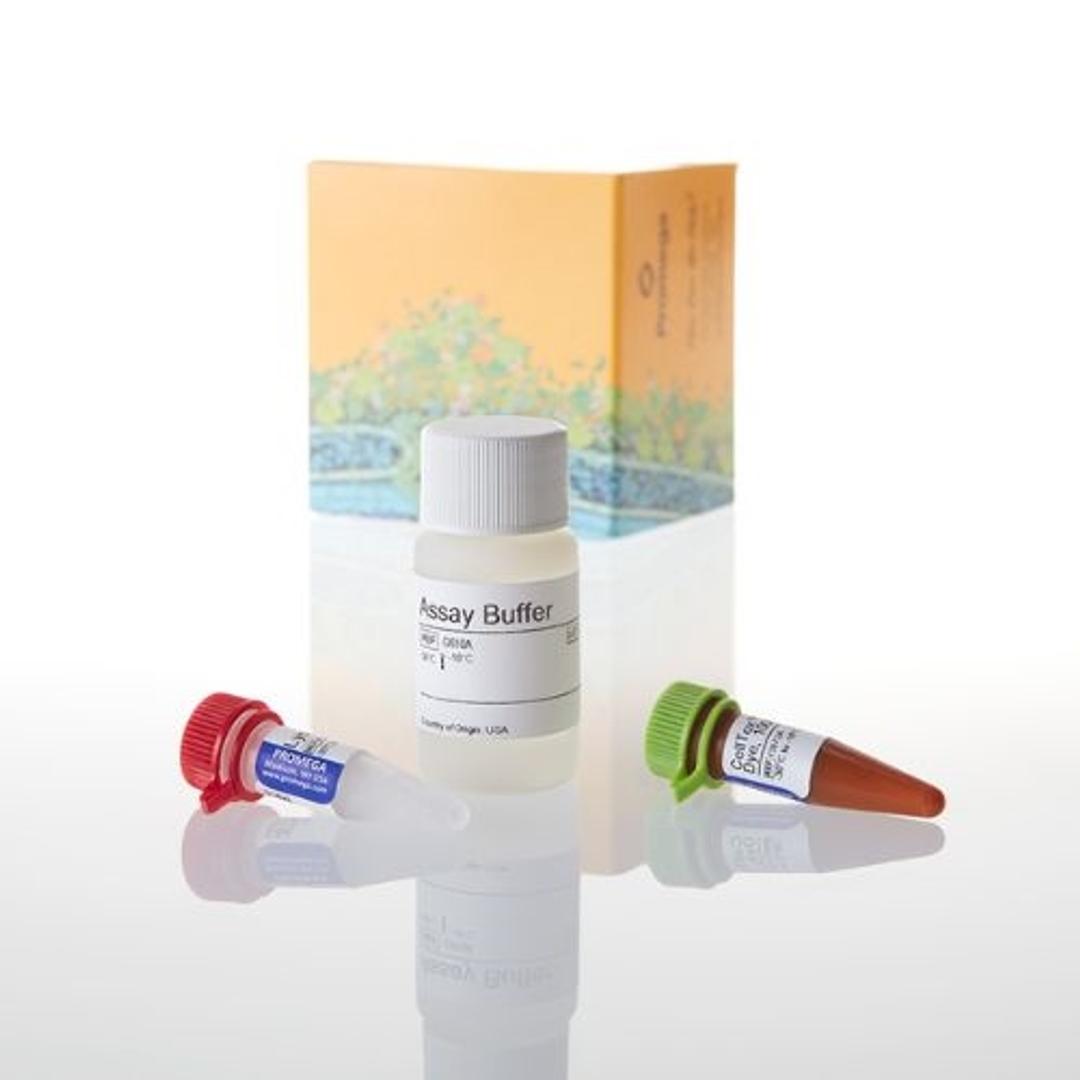
CellTox™ Green Cytotoxicity Assay
The CellTox™ Green Cytotoxicity Assay measures changes in membrane integrity that occur as a result of cell death. The assay is intended to assess cytotoxicity in cell culture after experimental manipulation. The assay system uses a proprietry asymmetric cyanine dye that is excluded from viable cells but preferentially stains the DNA from dead cells. When the dye binds DNA released from cells, its fluorescence properties are s…


Receive your quote directly from the manufacturer.
Good and easy to optimize!
Cell health assay
This product really helps me measure cell health in my high throughput assays with little optimization.
Review Date: 27 Jan 2020 | Promega Corp.
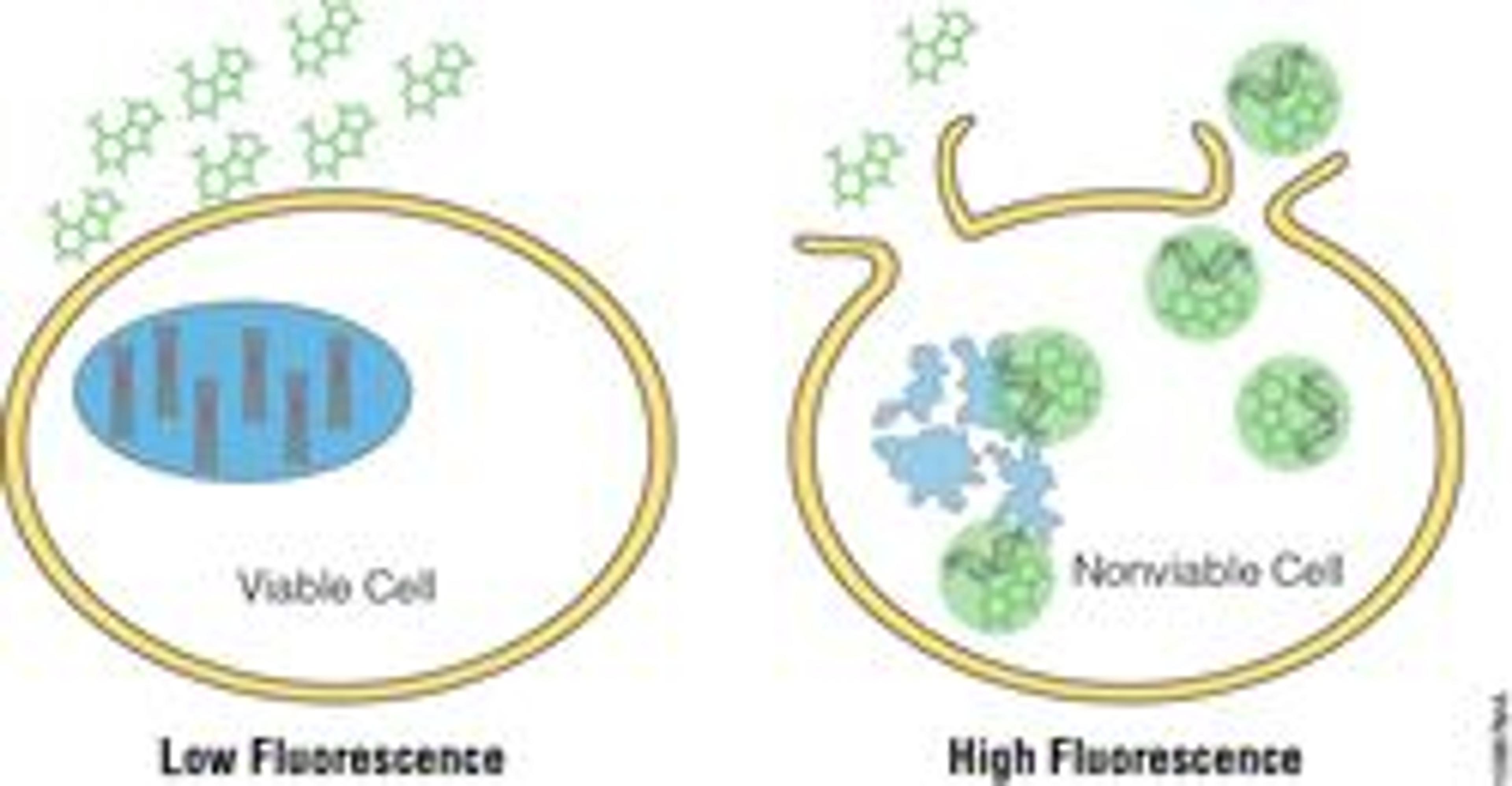
The CellTox™ Green Cytotoxicity Assay measures changes in membrane integrity that occur as a result of cell death. The assay is intended to assess cytotoxicity in cell culture after experimental manipulation. The assay system uses a proprietry asymmetric cyanine dye that is excluded from viable cells but preferentially stains the DNA from dead cells. When the dye binds DNA released from cells, its fluorescence properties are substantially enhanced. Viable cells produce no appreciable increases in fluorescence. Therefore, the fluorescence signal produced by the binding interaction with dead cell DNA is proportional to cytotoxicity. The CellTox™ Green Dye is non-toxic to cells, and the signal remains constant after exposure of 72 hours, making it ideal for determining toxic effects of treatments throughout an extended exposure or as an endpoint determination.
Features - Benefits
• Accurate Cytotoxicity Determination: The CellTox™ Green Dye stably binds DNA of cells that have lost membrane integrity throughout 72-hour exposure and won’t underestimate cytotoxicity.
• Kinetic Cytotoxicity Measures: Measure cytotoxicity at convenient time points from the same sample well to detect onset of toxicity with no duplication of plates.
• Simple and Flexible Protocols: Add assay reagent directly to cells prior to plating or with dosing media to perform kinetic cytotoxicity measurements, eliminating a reagent dispensing step, or add diluted dye directly to cell culture wells as an endpoint add-mix-measure assay.
• Multiplexing-Compatible: Get more informative data per well and reduce cell culture expenses by multiplexing with fluorescent and luminescent cell-based assays in the same well with no sample manipulation.
• Easily Automated: Easily scale from 96- to 1536-well plate formats with “no-addition” or “single-addition” protocols.
Applications
Determine cytotoxic effects of treatments on cells in culture after long-term exposure.

Measuring Live Cells and Dead Cells in Real Time for Days Using a Plate Reader: Subsequent Multiplexing to Improve Efficiency and Reproducibility
This Scientific Poster demonstrates how Promega’s recently developed assay technologies make it possible to use multi-well plate readers to measure the number of live or dead cells in culture in real time over a period of days. In addition to providing real time kinetic measurements that are valuable for assay development and characterization activities, multiplexing with other assays provides a time saving approach and statistical advantage inherent in taking measurements from the same sample of cells.
Modifications Required for ATP and Caspase Detection Assays Applied to 3D Cell Spheroids
This scientific poster investigates whether cell viability and apoptosis assays designed for 2D monolayers of cells would work effectively with 3D spheroid models. Cell viability assay reagents that measure ATP contain detergent to lyse cells and release ATP. Some commercial reagents have been found to have a low recovery of ATP from spheroids compared to acid extraction accepted as the gold standard. Reformulation of ATP assay reagent to contain higher amounts of detergent, increasing mixing time using a plate shaker, and using a longer incubation time in the presence of lytic reagents resulted in improvements in extraction of ATP from large 3D cell spheroids.
Measuring the Output of the CytoTox-Fluor™ Cytotoxicity Assay on the GloMax® Discover System
This application note describes the protocol for measuring fluorescence using the GloMax® Discover System with the CytoTox-Fluor™ Cytotoxicity Assay. The GloMax® Discover System in combination with the CytoTox-Fluor™ Cytotoxicity Assay provides a convenient, rapid and sensitive procedure for determining the number of dead cells in cell populations. Fluorescence correlates with the presence of a distinct protease activity associated with cytotoxicity and loss of membrane integrity.
Maximize Informational Content from Cell-Based Assays Using Multi-Parameter Mechanistic Toxicity Profiling
Testing compounds of interest in the biological context of the cell is a necessary step to identify toxic liability or confirm mechanism of action. This poster shows a mechanistic toxicity profiling panel that has been created in 384-well format consisting of assays used together to evaluate cell viability, cytotoxicity, and apoptosis. The assays consist of detection chemistries for live and dead cell protease activity, ATP content, membrane integrity, and caspase-3/7 activity. Select assays can be multiplexed together to enable more compounds to be analyzed per plate.
Validation of In Vitro Assays to Measure Cytotoxicity in 3D Cell Cultures
This poster presents the results of experiments designed to improve performance of assays for 3D spheroids. The lytic capacity of assay reagents was enhanced by optimizing the detergent concentration and the parameters for physical disruption necessary to extract the desired markers. Improved protocols and reagents are described to measure ATP as a cell viability marker, caspase-3/7 activity as an apoptosis marker, glutathione as a marker of oxidative stress and HIF-1 promoter driven expression of luciferase as a hypoxia marker.
Design and Validation of Bioluminescent Assays for 3D Cell Culture Models
This poster demonstrates the development of an improved reagent formulation for bioluminescent detection of ATP for measuring cell viability.
A Bi-functional Fluorescent Assay for the Assessment of Cytotoxicity and Proliferation
This poster demonstrates the development of a cell-impermeant probe which labels the DNA from cells with compromised membranes.
Verifying Performance of Cell Viability and Apoptosis Assays Applied to 3D Microtissues
The approach of this poster is to investigate whether increasing detergent concentrations to increase lytic capacity or providing physical disruption of samples, would improve the results of cell viability and apoptosis assays applied to microtissues grown using 3D culture models.
Real-Time Cytotoxicity Analysis Using CellTox™ Green Dye
This application note demonstrates the use of a non-activity-based cytotoxicity probe, CellTox™ Green Dye, which can be added at the beginning of an experiment and employed in real time for the kinetic determination of cytotoxicity. The HP D300 Digital Dispenser, available from Tecan, was used for noncontact dispensing of test compound and the Tecan Infinite® M200 PRO with Gas Control Module (GCM™) for kinetic measurement of cytotoxicity in HepG2 cells over 72 hours.
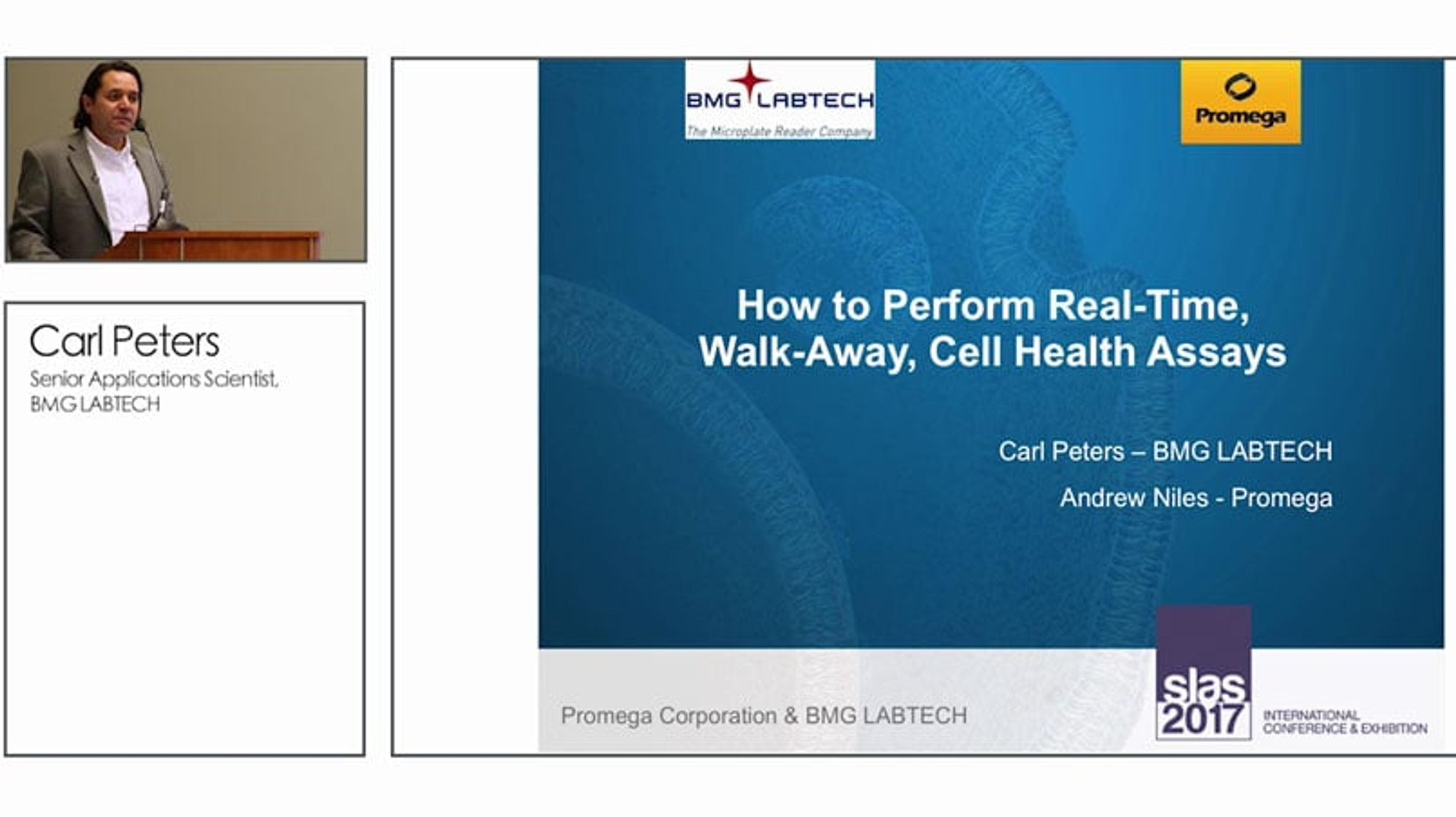
How to Perform Real-Time, Walk-Away, Cell Health Assays
In this presentation filmed during SLAS2017, Carl Peters Senior Applications Scientist, BMG Labtech and Andrew Niles, Senior Research Scientist, Promega, establish how the CLARIOStar® has enabled the development of walk-away cell health assays at Promega.