
Bruker Launches Next-Generation GC-APCI II GC-MS Interface with Automatic MS Calibration for Metabolomics and Small Molecule Research
24 Mar 2014
At Pittcon 2014 Bruker announced the launch of the new GC-APCI II source, the next generation of its established GC-MS interface, completely redesigned for increased usability and performance.
The new GC-APCI II allows routine and convenient combination of complementary techniques. In contrast to rigid GC-APCI-MS interfaces, it can be easily mounted and dismounted within minutes, with no need for tools. The unique flexible transfer line means that an exact alignment of GC and MS is no longer required; providing more freedom in positioning the GC system, and making better use of laboratory space.
Efficiently controlled heating of the transfer line preserves the outstanding GC separation of state-of-the-art GC-systems such as Bruker’s 436-GC and 456-GC.
The redesigned ionization chamber provides highest sensitivity and low background in combination with well-resolved GC-peaks, delivering dramatically improved dynamic range and LLOQs and up to tenfold gains in sensitivity.
The GC-APCI II can be combined with any Bruker ESI mass spectrometer, including the impact HD LC-QTOF introduced last year at the ASMS conference. The GC-APCI II makes the impact HD’s unique LC-QTOF MS capabilities — such as accurate-mass screening or determination of elemental compositions — accessible for GC-QTOF MS. The unique calibrant reservoir of the GC-APCI II interface enables software-controlled calibrant delivery. The calibrant can be added for data-file recalibration in each GC run. GC-APCI II is the best solution for ID of unknowns in metabolomics and small molecule research.
Thomas Hagedorn at Bruker Daltonics commented: “With the new GC-APCI II source, connecting a GC to a Bruker mass spectrometer is almost as easy as connecting an HPLC”.
Related products
Request Quote for All Products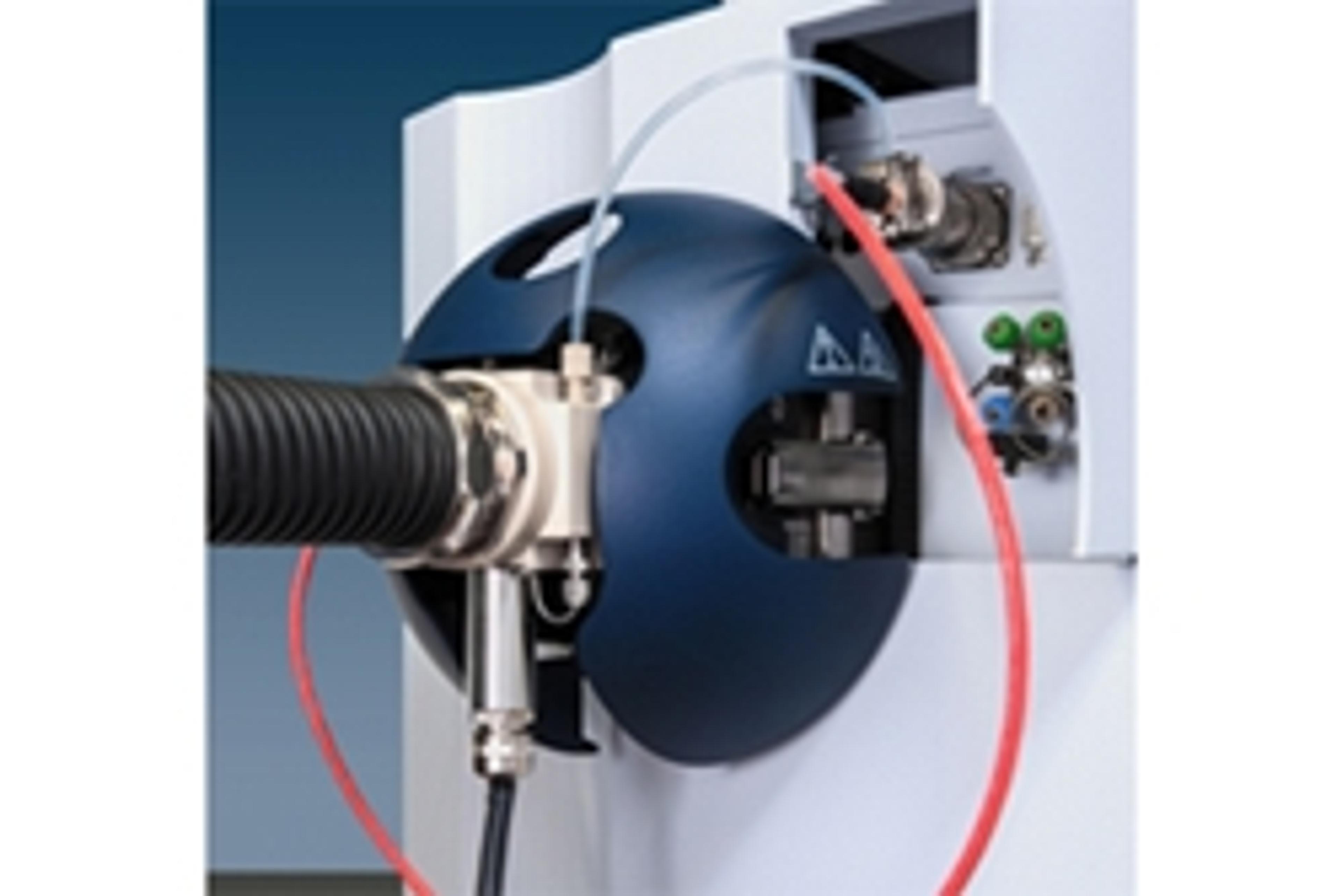
GC-APCI II Ion Source
Bruker CAMMaking a dedicated and expensive GC-TOF-MS used infrequently for just a few samples a thing of the past. The GC-APCI II source enables GC coupling to any Bruker TOF or QTOF, trap or FTMS system originally designed for LC coupling.With its second generation GC-APCI source, Bruker offers the greatest flexibility and highest performance with a combined GC frontend and high-resolution MS system for confident ID of unknown compounds using complementary MS technology. The GC-APCI II interface can be coupled to any Bruker MS system with the common Apollo II source design.GC-APCI II is designed to connect to state-of-the-art GC systems including Bruker's 436-GC and 456-GC but can also be used with third party GC systems. The flexible, heated transfer line, automatic MS calibration and outstanding sensitivity make GC-APCI II the best solution for unknown ID in metabolomics and small molecule research.GC-APCI II Ion Source Features: Switching of the sources without venting the vacuum - The system has the capability to be easily switched from GC to LC and vice versa without tools and within minutes. There is no need to vent the MS vacuum. Greater Flexibility - The design of the flexible heated transfer line means that the GC and MS must no longer be precisely aligned. Interfacing the GC and MS is simpler, giving more options in positioning the MS and GC while preserving the obtained GC separation. Automatic MS Calibration - The unique calibrant reservoir of the GC-APCI II interface enables software-controlled calibrant delivery. Improved LLOQ - The optimized ionization chamber provides improved GC-MS performance including lower background and higher sensitivity. Applications: Unknown ID in Metabolomics Polycyclic Aromatic Hydrocarbons (PAH) Forensic Analysis Pesticide Analysis
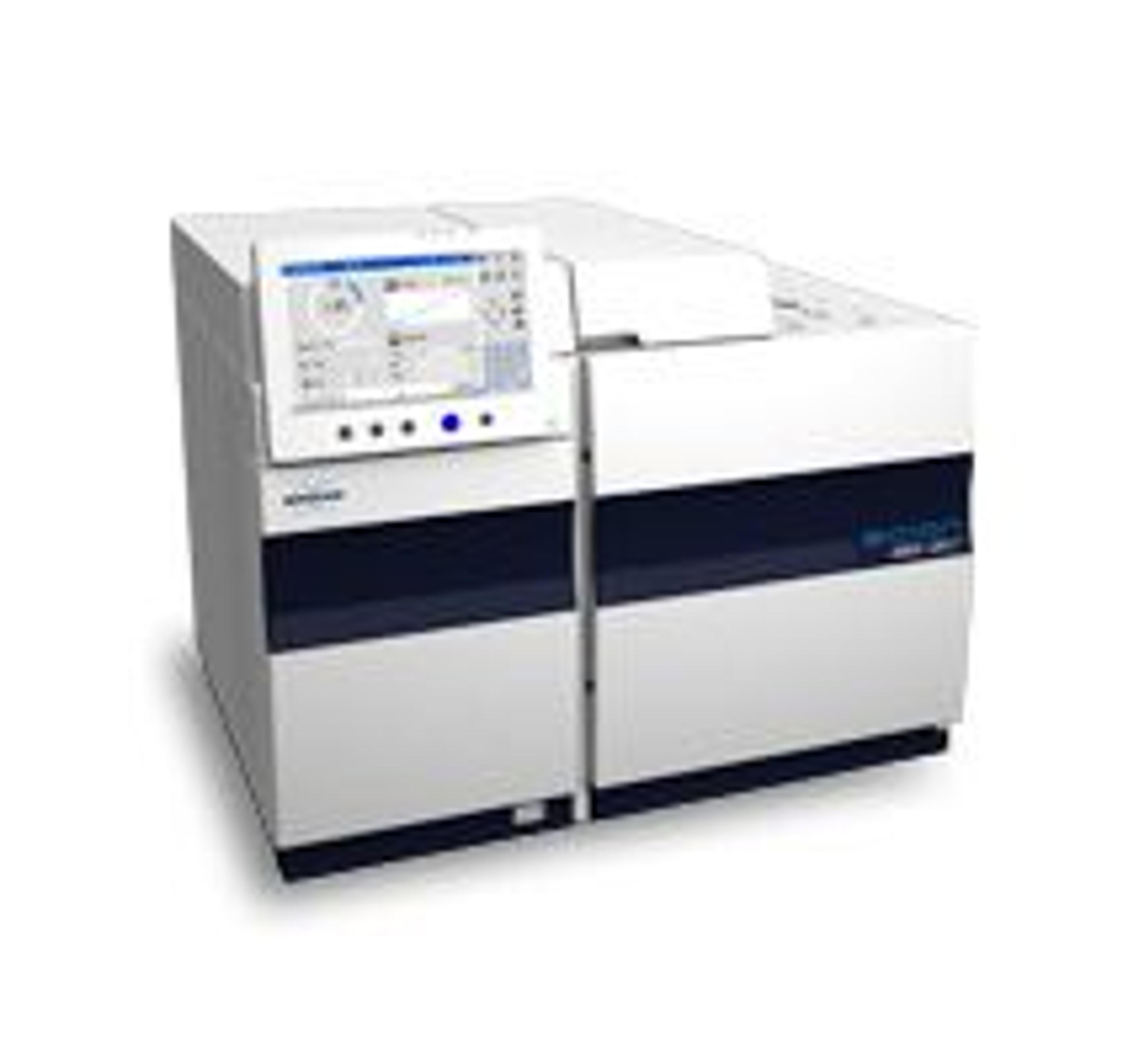
SCION 456-GC
Bruker CAMThe SCION 456-GC provides industry-leading flexibility by supporting 3 injectors and 4 detectors, including the mass spectrometer, providing our users a rapid time-to-benefit advantage.