TechTalk: Go beyond conventional DRIFTS: Faster kinetics, greater control with the new addition to the Harrick Praying Mantis ecosystem
Friday, November 6 at 16:00 GMT | 17:00 CET | 11:00 EST | 08:00 PST
Researchers studying catalytic surfaces under working reaction conditions often face two persistent challenges: slow gas exchange that blurs transient kinetic behavior, and sample handling that risks cross-contamination or disturbs the catalyst bed between runs.
This TechTalk explores how the latest addition to the Praying Mantis ecosystem addresses both challenges. The Low-Volume HVC reaction chamber enables rapid gas switching for transient measurements and modulation experiments, while a second thermocouple allows sample-cup temperature to be monitored separately from the heater.
Silcolloy 2000-coated chambers reduce unwanted interactions between reaction gases and exposed metal surfaces, and new replaceable sample-cup inserts simplify handling and reduce carryover between experiments.
Drawing on recent collaborative studies, including CO adsorption and desorption work using a Harrick HVC reactor, this session shows how these improvements translate into more reliable, reproducible operando data.
Certificate of attendance
If you attend the live TechTalk, you will automatically receive a certificate of attendance, including a learning outcomes summary, for continuing education purposes. If you view the on-demand TechTalk, you can request a certificate of attendance by emailing editor@selectscience.net.
TechTalk details
- Cost: Free to attend
- Location: Online
- Duration: 20 minutes
Registration is required to secure your place. If you register but can’t attend live, you will receive a link to the on-demand recording once it becomes available.
Speakers
Who should attend?
Catalysis researchers, application scientists, and spectroscopists running operando or in situ DRIFTS experiments, particularly those studying gas–solid catalytic reactions, electrocatalysis or photocatalysis, and existing Praying Mantis users looking to upgrade their setup.
It is also relevant for electrochemists and materials researchers, especially those working with electrodes, semiconductors, catalysts, and other electrochemically active materials.
Featured products
Request Quote for All Products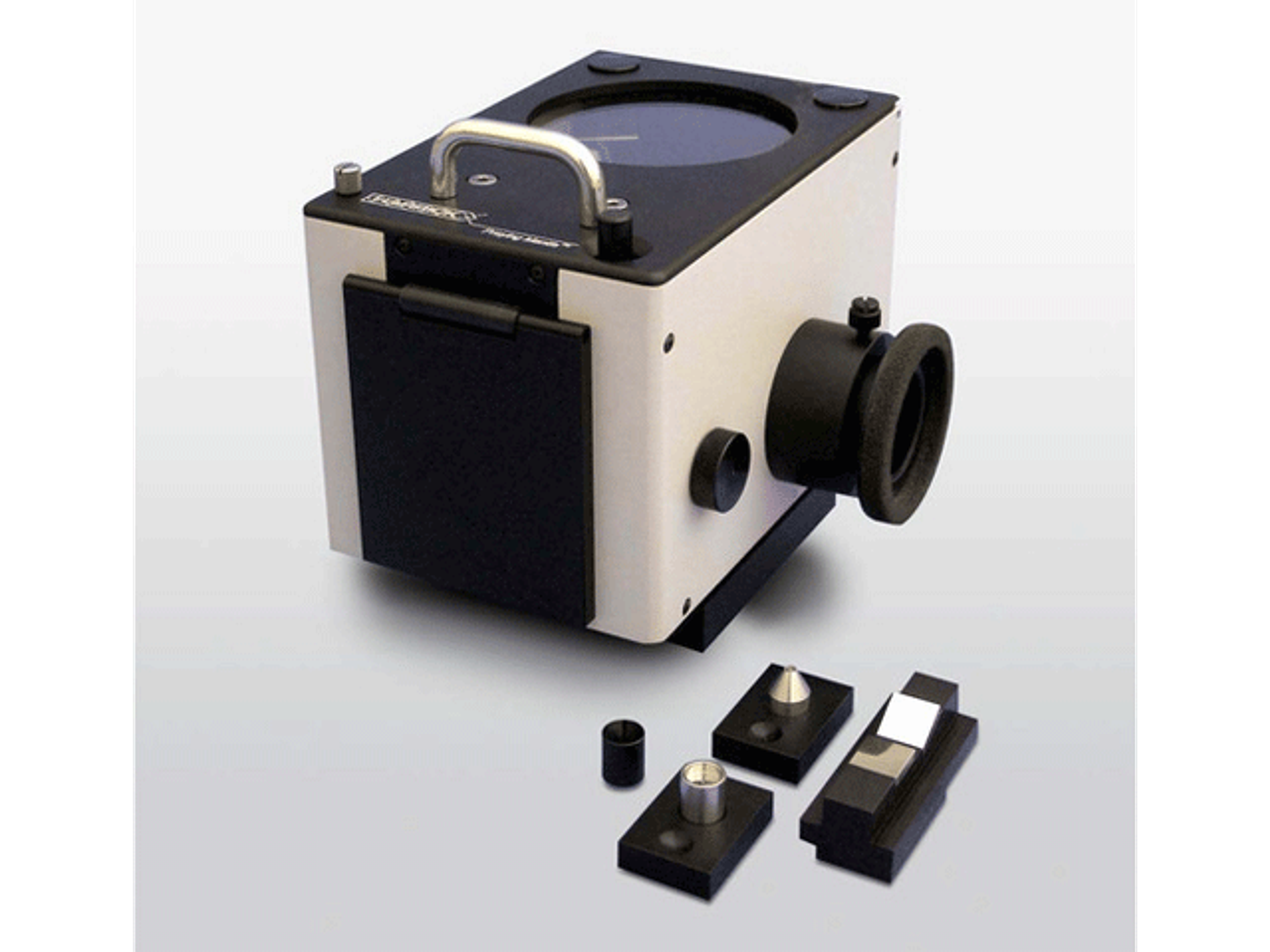
Harrick Praying Mantis™ Diffuse Reflection Catalysis Package
Specac LtdA diffuse reflection FTIR accessory with a high temperature reaction chamber for studying heterogeneous catalysis, gas-solid interactions, photochemical reactions, and oxidation mechanisms.
What will this webinar cover?
- The sample-handling and gas-exchange limitations that can distort transient kinetic and modulation-based DRIFTS measurements
- How the Low-Volume HVC reaction chamber enables rapid gas switching for transient measurements and modulation experiments
- How a separate sample-cup thermocouple gives more accurate insight into actual catalyst bed temperature alongside the heater reading
- How Silcolloy 2000 coatings and replaceable sample-cup inserts reduce contamination, carryover, and sample requirements between runs