
Why vacuum performance is gaining attention in analytical chemistry labs
For the engineers building tomorrow's analytical instruments, the biggest vacuum risk often has nothing to do with vacuum at all: it is failing to see the whole system before it is too late
30 Oct 2026
Vacuum rarely gets top billing in a product launch. It sits underneath the mass spectrometer, inside the deposition chamber, behind the semiconductor tool, doing quiet work that makes the actual science possible. But according to two veterans who have spent their careers building that infrastructure, treating vacuum as an afterthought bolted on late in design is exactly what puts programs at risk of missing their launch dates.

(Left) Ken Halligan, Chief Hardware Architect, SCIEX and (right) John Screech, Senior Applications Engineer for Agilent Vacuum Products Division.
That was the premise of ‘Beyond the Pump’, a recent Agilent Technologies webinar featuring John Screech, senior applications engineer for Agilent's Vacuum Products division, and guest Ken Halligan, a senior leader in new product development with more than 35 years in analytical instrumentation. Screech, a physics graduate who joined Agilent in 2011, now leads training and education for the division. Halligan's recent work centers on a question that vexes nearly every hardware organization: how do you deliver innovative products that excite customers while still hitting cost, schedule, and scope targets? Together, they built a case for engineering vacuum, and any complex subsystem, into a product from day one rather than selecting it off a shelf at the end.
The goal was never the vacuum
Screech opened by reframing the subject entirely. “The goal is not to create vacuum,” he told the audience. Nobody buys a pump because they want a vacuum; they buy it because vacuum lets them steer ions, deposit a clean semiconductor layer, or protect materials from the atmosphere. That framing shapes how he sizes up a customer. The hardest ones, he said, are those who call and say, “I want your best price on part number XYZ.” The best partnerships start differently: “This is what I'm trying to accomplish. Help me get there.” Screech admits he has fallen into the trap himself of treating a vacuum subsystem as “an individual collection of components that can simply be mounted into a piece of instrumentation,” which “often introduces late-stage development risk.”
Selecting and integrating vacuum pumps
Every system starts with a roughing decision, and Screech's first question to any customer is blunt: “Can you tolerate oil?” Oil-sealed rotary vane pumps remain “the lowest cost option for the majority of vacuum processes,” but more instruments now cannot risk even trace hydrocarbon contamination, pushing the industry toward dry, oil-free pumps. SelectScience's own guide to common laboratory pumps makes the same case for scroll pumps, which run oil-free and, because their rotating elements can be perfectly counterbalanced, operate with minimal vibration.
Agilent's scroll lineup spans that range, from the compact, hermetic IDP-4 to the higher-capacity IDP-35 and IDP-45, which deliver serious pumping speed without giving up oil-free operation. Getting a pump that large onto ordinary wall power took real engineering: frequency inverters convert single-phase input into the three-phase power large motors need, letting Agilent sell a 125-cubic-meter-per-hour pump that runs on 240-volt single-phase power alone. The video introduction to the IDP family walks through how that scroll technology simplifies holding a stable high vacuum.
High vacuum choices get more nuanced. Agilent's MacroTorr turbo pumps handle large, steady gas loads, while its newer Twistor drag stage trades some throughput for the lowest achievable base pressure in a compact footprint. Mounting matters too: a catalog turbo pump bolts to a standard flange, preserving “the largest flexibility if there was a reason to change suppliers,” but forces buyers to round up to the next available size. An insertable cartridge pump, by contrast, mounts inside the customer's own chamber for what Screech calls, “the ultimate in terms of doing co-development efforts in high vacuum.” “Pumps can't be selected in isolation,” he said. “We need to have a holistic approach to incorporating a vacuum subsystem into a parent instrument or process design.”
The knowledge-first framework
Halligan's half of the webinar addressed the discipline that keeps ambitious projects on schedule. He recalled a company president once asking leadership why they were always late on schedules “in spite of the fact that we have experienced and professional project managers.” The answer he eventually found, “the reason we're consistently late with our big projects is that we are doing research when everybody thinks that we're doing implementation and design.”
He calls the result a technology setback, borrowed from Toyota's lean literature: a project retreats to an earlier stage because a solution isn't performing to requirement. Standard project management cannot rescue that kind of delay because “in exploratory work, research work, the results that you get today often determine what you're going to be working on tomorrow.” His fix is a technology readiness framework, a phase-gate process that breaks one uncertain program into smaller ones, each gate forcing hard questions before advancing. Get it wrong, and the compounding losses force teams to cut scope, stretch schedules, or spend more money. “This is about knowledge first, which ensures readiness,” he said.
Bringing innovation in without the risk
Screech pushed Halligan to apply that thinking to a familiar tension: catalog pumps are proven and swappable, while a cartridge pump is more capable but harder to walk back from. Halligan's answer starts with ranked product attributes. If a custom part moves several of them at once, “engineering is about making trade-offs,” he said. “We would make that trade-off to have the enhanced performance.” The downsides can be engineered around rather than simply avoided. On vendor selection, he was direct, “If you're partnering with somebody who can provide you that kind of capability, they have to be doing a lot of things right,” describing it as a cascade of the same readiness discipline flowing from an instrument maker's own program into its supplier's.
Case study: a university helium dilution refrigerator upgrade
Screech closed with proof this works at any scale. A university group running a helium dilution refrigerator called Agilent when a turbo pump reached its end of life, but instead of requesting a replacement, asked, “What's possible? Do you have something else?” That question led to both pumps being upgraded for light-gas performance and custom firmware built for helium-only operation, dramatically compressing the system's preparation cycle. Agilent is now evaluating its largest scroll pumps, the IDP-35 and IDP-45, on that same system. “Instead of getting a replacement pump,” Screech said, “the customer now has a more capable research tool than they would have had otherwise.”
A partnership that does not end at delivery
Screech's closing point tied both halves together: Agilent frames its role across a full customer journey, consultation, design, technology selection, installation, monitoring, maintenance, optimization, and expansion, treating delivery as the start of a relationship, not the end. Pulled together, the lesson is simple: start with the application, not the part number; design for the whole system rather than a bag of components; plan for monitoring and expansion from day one; and treat any technology partner with the same disciplined, attribute-driven rigor. None of that makes vacuum glamorous. But treating it as an afterthought is how ambitious projects run late, and treating it as an integrated, partnered discipline is how instruments actually reach the market on time.
Browse Agilent's full range of vacuum pumps and technologies on SelectScience.
Related products
Request Quote for All Products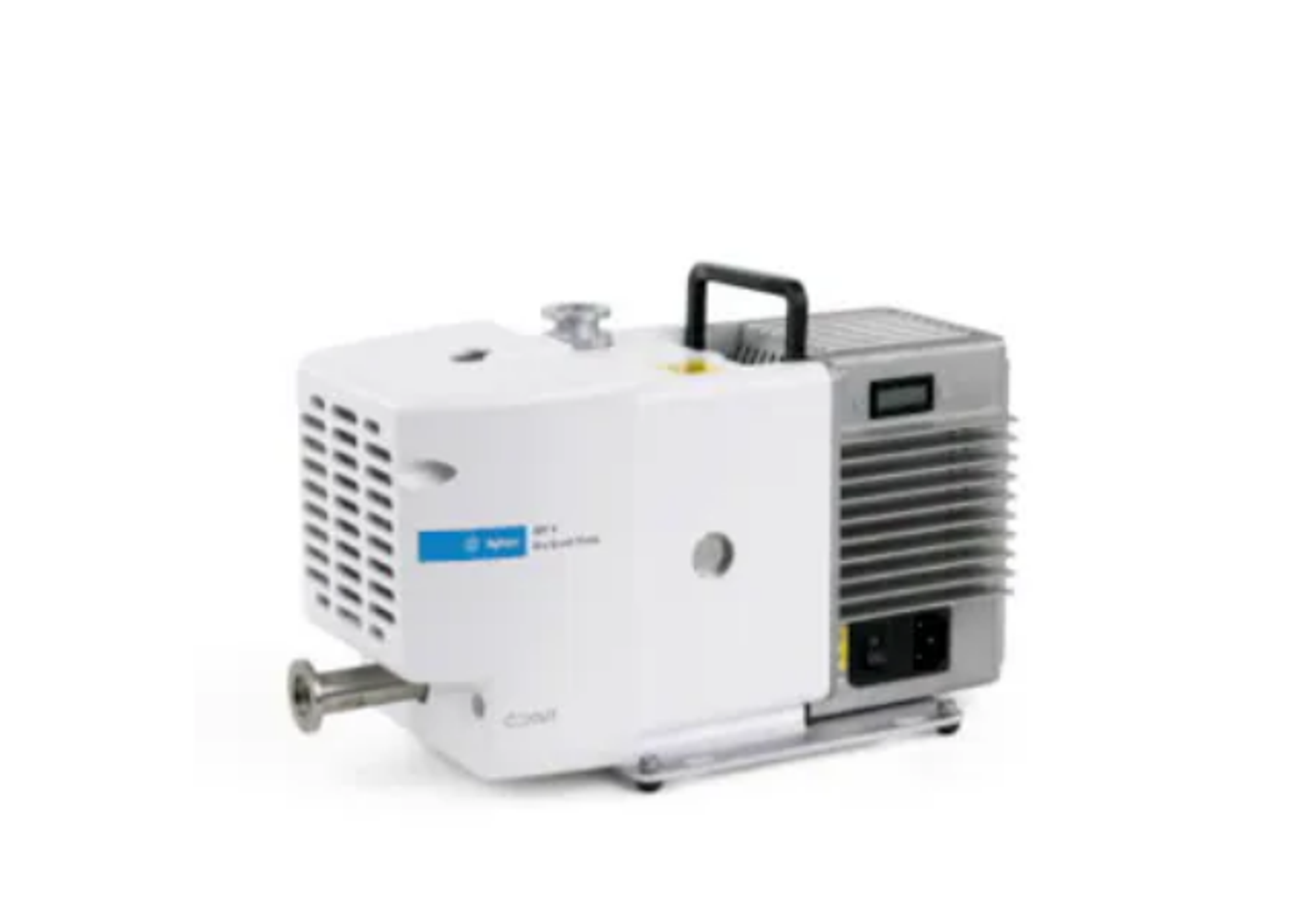
IDP-4 Dry Scroll Pump
Agilent TechnologiesThe Agilent IDP-4 is a compact, oil-free, and hermetic scroll pump delivering clean, dry vacuum in a small footprint.
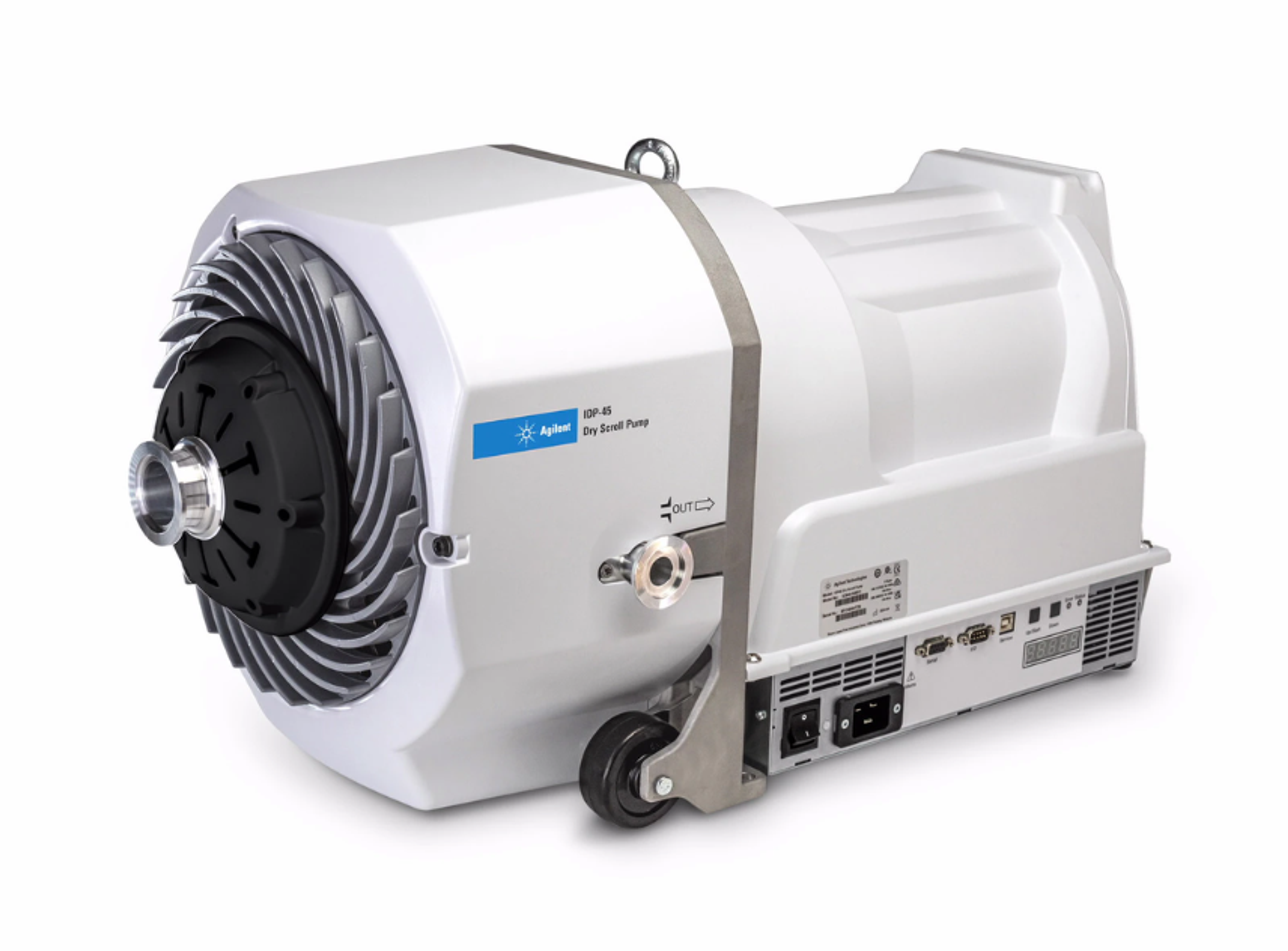
IDP-45 Dry Scroll Pump
Agilent TechnologiesThe Agilent IDP-45 dry scroll pump is a sustainable, oil-free and hermetic pump that guarantees a clean and contamination-free vacuum. This pump is the largest IDP in the series, with the highest pumping speed and inverter-driven motor that allows tunable rotational speed to control pumping speed and noise level.
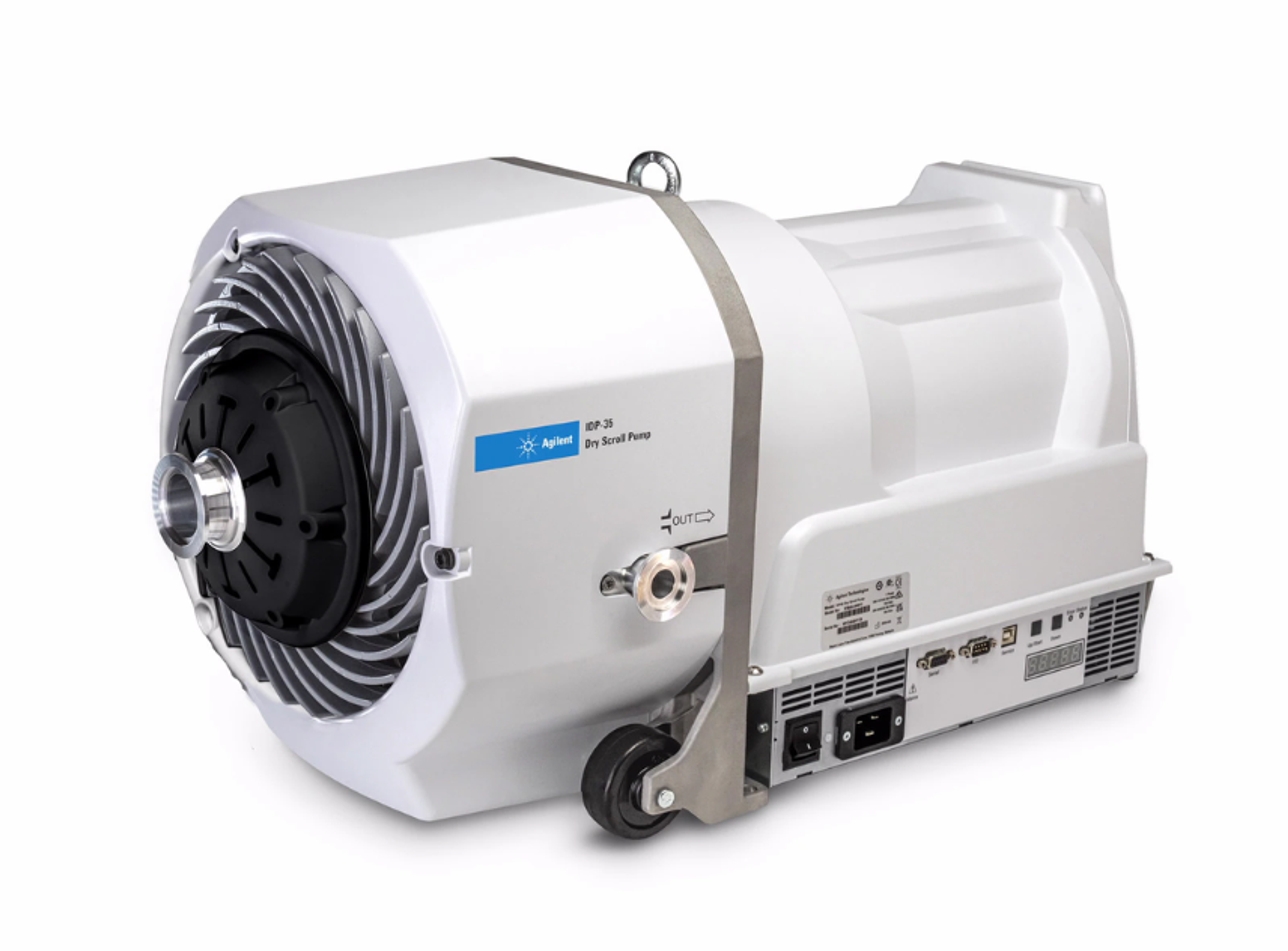
IDP-35 Dry Scroll Pump
Agilent TechnologiesThe Agilent IDP-35 scroll pump is a dry, hermetic vacuum pump with a modern interface and smart features designed for wide range speed control and easy communication. This pump ensures oil-free operation for clean and contamination-free vacuum, making it an environmentally friendly pump.
Links
Tags
Frequently asked questions
Show frequently asked questions
Why should vacuum subsystem design begin early in product development?
Early vacuum integration reduces late-stage development risk by aligning pumps, chambers, monitoring, maintenance, and expansion with the instrument’s application. John Screech and Ken Halligan argue that starting with system goals, not a pump part number, helps hardware teams meet performance, cost, scope, and launch schedule targets.
How do oil-sealed rotary vane pumps compare with Agilent dry scroll pumps?
Oil-sealed rotary vane pumps are typically the lowest-cost choice for many vacuum processes, but they can introduce hydrocarbon contamination. Agilent dry scroll pumps, including the IDP-4, IDP-35, and IDP-45, provide oil-free operation with minimal vibration. Pump selection should reflect contamination tolerance, pumping speed, power, and system requirements.
How did Agilent improve a university helium dilution refrigerator?
Rather than simply replacing an end-of-life turbo pump, Agilent upgraded both pumps for light-gas performance and developed custom firmware for helium-only operation. This dramatically shortened the preparation cycle and created a more capable research tool. Agilent is also evaluating its IDP-35 and IDP-45 scroll pumps on the system.