
Why solvent sustainability is climbing the analytical chemistry agenda
Biorenewable solvents are helping HPLC, UHPLC, and LC-MS laboratories reduce their environmental footprint while delivering the performance scientists expect
2 Nov 2026

John Cooper, Senior Global Product Manager, Analytical Essentials, Merck
Sustainability is becoming a key priority across analytical laboratories, prompting scientists to take a closer look at the environmental impact of everyday workflows. High-performance liquid chromatography (HPLC), ultra-high-performance liquid chromatography (UHPLC), and liquid chromatography-mass spectrometry (LC-MS) remain essential tools for routine testing, quality control (QC), and research. These techniques rely heavily on organic solvents, many of which are derived from fossil fuels, require energy-intensive manufacturing, and generate waste that can have a lasting environmental footprint.
In analytical chromatography labs across all of life sciences, sustainability is shifting from being a background consideration to an active procurement criterion, explains John Cooper, Senior Global Product Manager, Analytical Essentials, Merck. “Solvents are a natural focus here, as they represent one of the largest volumes of consumable chemicals in liquid chromatography workflows and a significant source of organic waste”.
Rethinking solvent selection for sustainable chromatography
In liquid chromatography, the solvent is the mobile phase, and it directly influences separation, detection, and signal quality.
According to Cooper, “Any impurities can show up quickly, whether it is ghost peaks, elevated baselines, or suppressed ionization in mass spectrometry systems. In routine testing environments, lot-to-lot consistency is just as important as purity. Even subtle variations between batches can introduce method drift that takes significant time to diagnose.”
As a result, solvent selection has traditionally been based on purity, consistency and availability, but in the present day, sourcing laboratory consumables is often based on criteria such as renewable feedstocks, product carbon footprints and supplier sustainability credentials. Using bio-based solvents, for example from renewable biomass, created by chemical transformation or extracted from by-products of existing processes, can help to reduce analytical laboratories’ carbon footprints, but these must meet the critical needs of laboratories with no performance trade-off.
“Consistency and reproducibility are critical because laboratories rely on predictable performance over thousands of analyses, especially as labs increasingly rely on automated workflows. In sensitive applications, contaminants may interfere with analyte detection or create misleading results,” says Jane Murray, Global Head of Green Chemistry, Sustainability & Social Business Innovation, Merck. “As drop-in replacement solvents are chemically identical to the traditional solvent, this can make adoption easier for customers looking to choose bio-based solvents with a reduced environmental footprint, without compromising on performance.”
Potential challenges in adopting bio-based solvents:
- Potential impact on the method performance, including solvency and reaction efficiency
- Compatibility with existing processes and instruments
- Need for process redevelopment and revalidation
- Product quality
- Consistency between production batches
- Supply reliability: continuity and availability
- Reliability and documentation of sustainability claims
- Compliance with regulatory requirements
Developing more sustainable alternatives to traditional solvents
Cooper notes that analytical chromatography has been an underrepresented area for bio-based solvent options until now, and his customers have been clear about what they need; a bio-based solvent that could be implemented as a direct replacement, but not at the cost of analytical performance or the need for extensive method re-development.
Based on this brief, Merck developed bio-based chromatography solvents from renewable feedstocks, designed to offer the same performance and consistency expected from conventional chromatography solvents.
“The goal is to help customers reduce their product-related greenhouse gas emissions and allow labs to adopt more sustainable options without needing to re-develop methods or change existing instrumentation,” explains Murray.
In April 2026, Merck launched what the company believes to be the first bio-based solvent portfolio specifically for HPLC, including acetonitrile, methanol, and ethanol.
“Our analysis showed that, on average, these bio-based solvents, all manufactured from renewable feedstocks, deliver up to 28% lower CO₂ equivalents than their conventional alternatives,” says Cooper.
What labs need to know before switching solvents
Analytical chemists need to know that they can use the new bio-based solvents without giving up on performance or having to re-develop their methods. Batch consistency data and results from comparative studies can reassure users that the performance of the bio-based alternatives will match those of conventional products.
The first step for the users is to confirm that the new solvent’s specifications, such as physicochemical properties and compendial compliance, meet those of the existing product. The next step is to check for chromatographic equivalence, by looking at vendor data for retention times, peak shape, resolution, and baseline stability, and then testing the solvents using their own processes. Matching all of these will limit or eliminate any re-development burden.
Finally, users need to confirm the verified sustainability credentials such as CO₂e, product carbon footprint (PCF) data, and bio-carbon content certification such as DIN EN 16640 or ASTM D6866. These will give the compliance team what they require for audits and ESG (environmental, social and governance) reporting.
“Suppliers can play a critical role here by providing high-quality products in standard formats and with a reliable supply chain, along with application notes and compatibility guidance to reduce the friction of transition to the new product,” says Cooper.
This should ideally be backed up with comprehensive product specifications, certificates of analysis and application, verified comparative performance data, regulatory and quality documentation, and confirmation of reliable global supply chains, along with well-documented sustainability metrics, such as PCF or renewable carbon content.
What comes next for bio-based solvents?
As organizations report on their progress towards the Greenhouse Gas Protocol’s Scope 3 emissions targets, the carbon footprint of analytical consumables will face growing scrutiny. Sustainability criteria are becoming a standard component of procurement and method selection processes, rather than a ‘nice to have’ requirement.
“Laboratories will increasingly evaluate not only analytical performance and cost, but also environmental impacts across the entirety of the product life cycle. At the same time, expectations will rise, as solutions are sought to simultaneously deliver analytical excellence, regulatory confidence, operational efficiency, and sustainability benefits,” highlights Murray. “Customers will want independently verified sustainability claims, detailed emissions data, and products that can be seamlessly integrated into existing workflows. This transition will become more successful as sustainability solutions evolve from being comparable with conventional solutions to outperforming them.”
For Cooper, sustainability is becoming a defining feature of modern analytical chemistry as it climbs the laboratory agenda. He concludes, “What is a differentiator today will become a baseline expectation for sustainability in chemistry. Regulatory guidance and industry frameworks are increasingly referencing sustainability principles, and a new generation of scientists is entering the field with sustainability as a core value.”
The Life Science business of Merck operates as MilliporeSigma in the U.S. and Canada.
Related products
Request Quote for All Products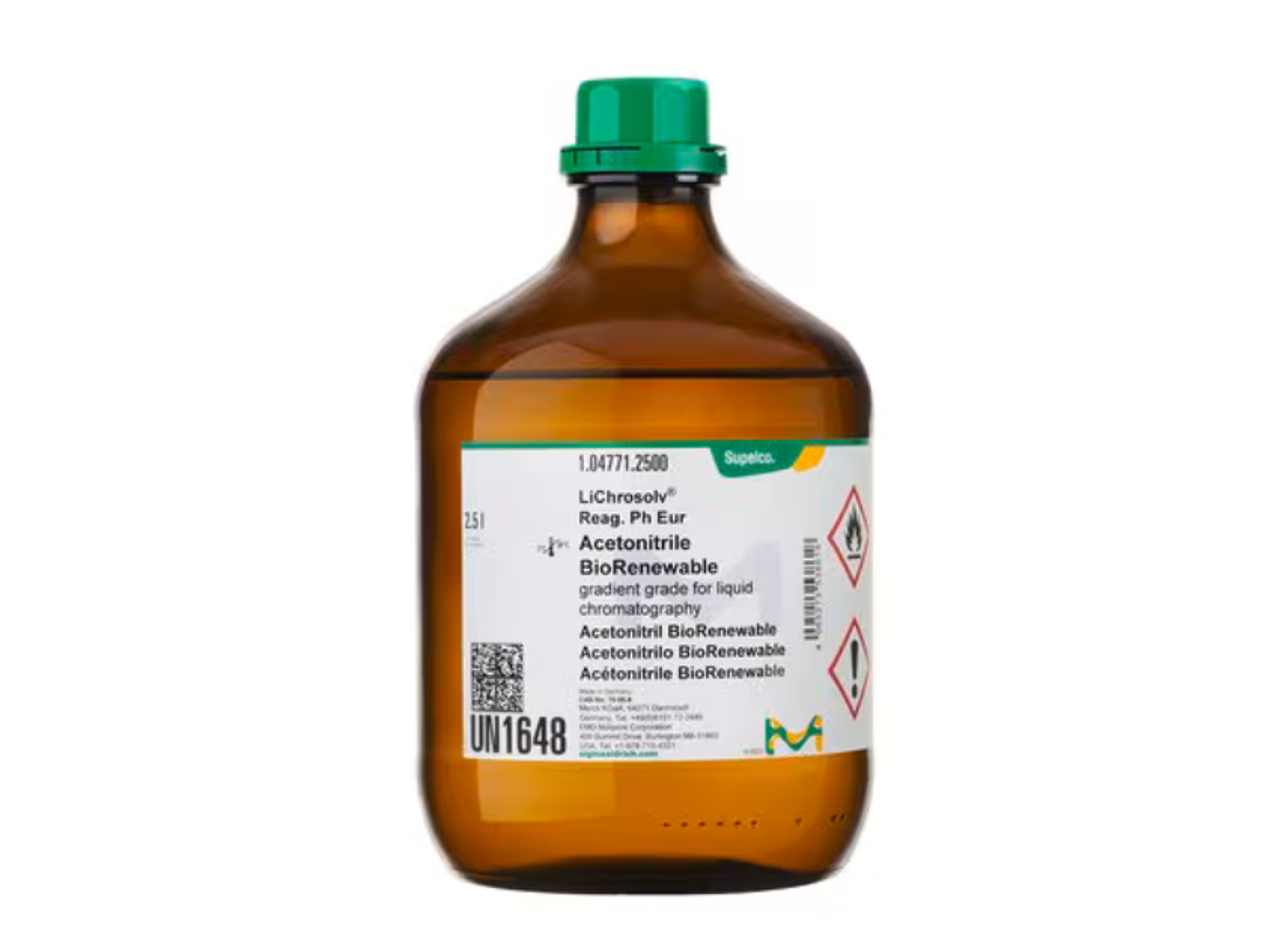
Bio-Based Acetonitrile Gradient Grade for HPLC, LiChrosolv
MerckBioRenewable, gradient grade for liquid chromatography LiChrosolv® Reag. Ph Eur
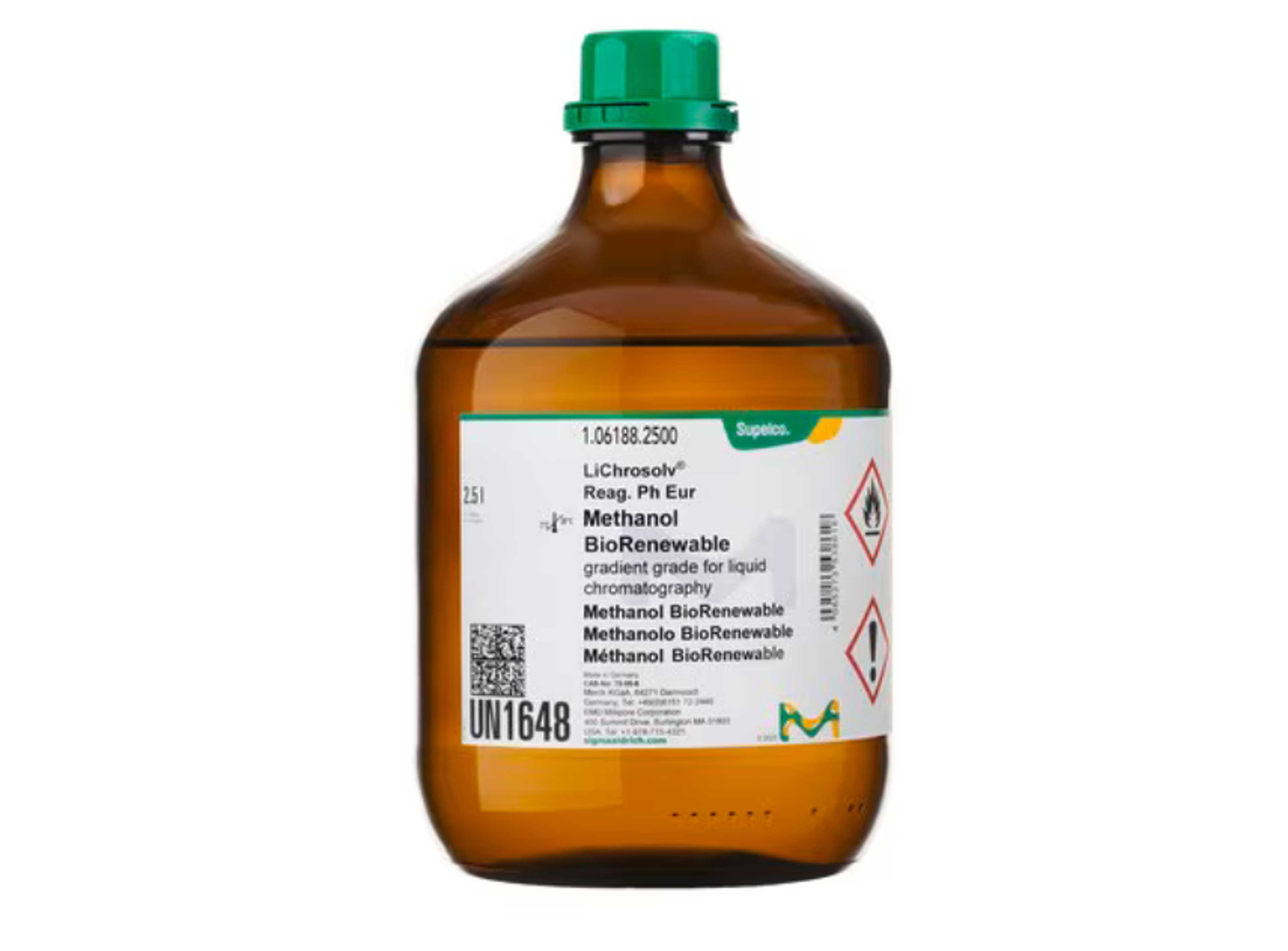
Bio-Based Methanol Gradient Grade for HPLC, LiChrosolv
MerckBioRenewable, gradient grade for liquid chromatography, LiChrosolv®, reag. Ph. Eur.
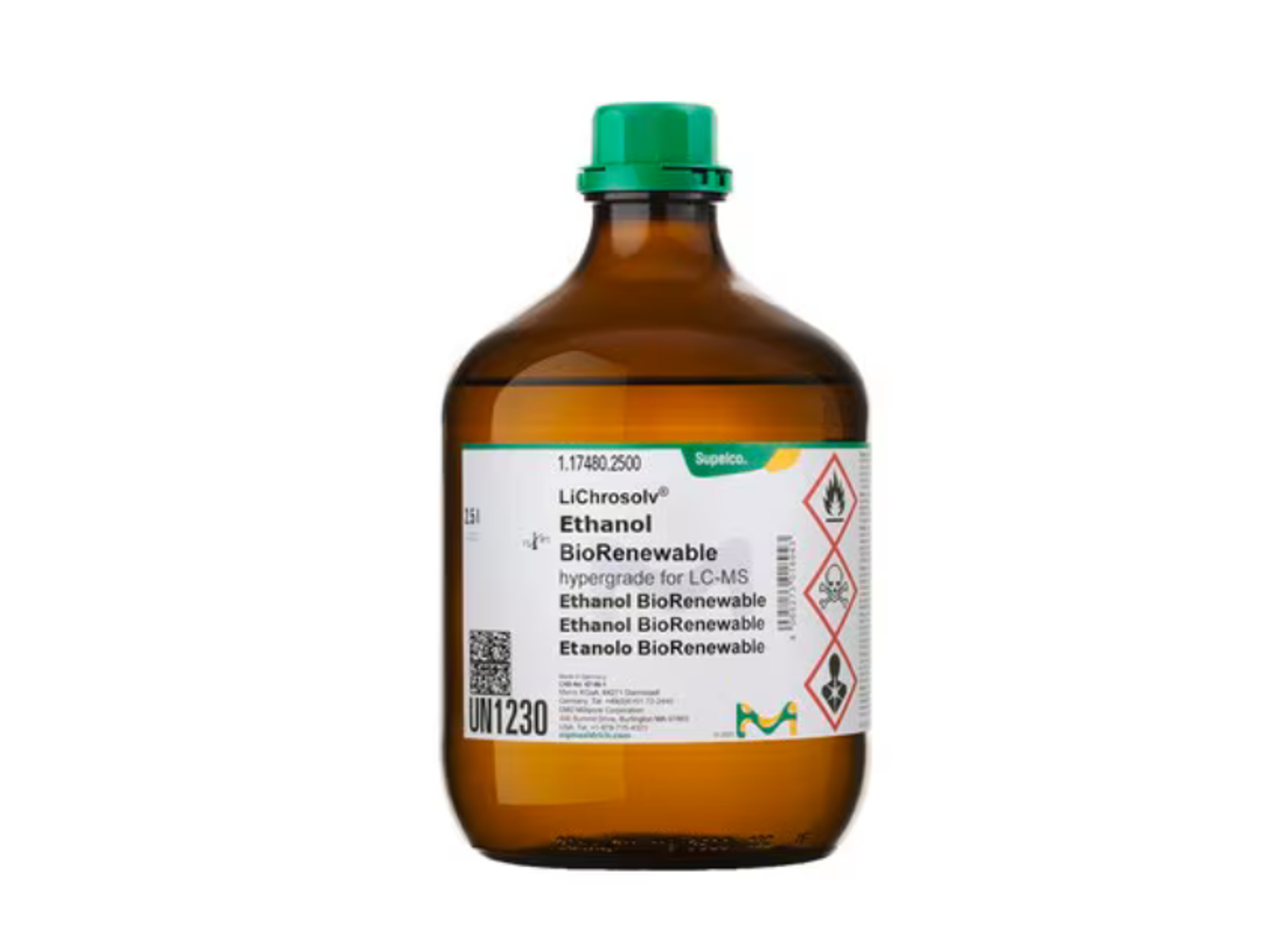
Bio-Based Ethanol, LCMS Grade, LiChrosolv BioRenewable
MerckBioRenewable, ≥99.9% (GC), suitable for LC-MS, LiChrosolv®
Links
Tags
Frequently asked questions
Show frequently asked questions
How do bio-based HPLC solvents improve laboratory sustainability?
Bio-based HPLC solvents made from renewable feedstocks can reduce product-related greenhouse gas emissions without sacrificing analytical performance. Merck reports that its bio-based acetonitrile, methanol, and ethanol deliver up to 28% lower CO₂ equivalents on average than conventional alternatives.
What should analytical laboratories verify before switching to bio-based chromatography solvents?
Laboratories should confirm physicochemical specifications, compendial compliance, batch consistency, and chromatographic equivalence. They should compare retention times, peak shape, resolution, and baseline stability, then test the solvents in their workflows. Verified CO₂e, product carbon footprint data, and bio-carbon certification should also be reviewed.
Can bio-based solvents replace conventional solvents in HPLC, UHPLC, and LC-MS workflows?
Drop-in bio-based solvents are chemically identical to traditional solvents, supporting adoption without changing instruments or redeveloping methods when specifications and performance match. Suppliers should provide compatibility guidance, certificates of analysis, comparative performance data, regulatory documentation, sustainability metrics, and reliable supply.