
How rapid AST can guide earlier treatment of resistant Gram-negative infections and support timely clinical action
As antimicrobial resistance complicates treatment decisions for serious Gram-negative infections, Prof. Gian Maria Rossolini explains why rapid antimicrobial susceptibility testing must deliver reliable information through clinical pathways designed to act on it
5 Nov 2026
Prof. Gian Maria Rossolini, Professor of Clinical Microbiology at the University of Florence and Director of the Clinical Microbiology and Virology Unit at Careggi University Hospital, Italy
For patients with serious Gram-negative infections, selecting an appropriate antimicrobial treatment quickly can be critical. Yet rising antimicrobial resistance is making early treatment decisions increasingly difficult. Clinicians must account for the possibility of a resistant pathogen, often before its identity or susceptibility profile is known, without unnecessarily exposing patients to the broadest available antibiotics.
The 2026 Surviving Sepsis Campaign guidelines reinforce the importance of early recognition and timely treatment of infection, while incorporating responsible antimicrobial use, appropriate diagnostic strategies, and treatment de-escalation. The guidance also recognises that antimicrobial timing should reflect the severity of illness and level of diagnostic certainty.
Against this background, clinical microbiology laboratories are being asked to provide earlier, more comprehensive information that can help clinicians move from empirical coverage to targeted treatment.
In this SelectScience® interview, conducted in partnership with Gradientech, Prof. Gian Maria Rossolini discusses what makes rapid antimicrobial susceptibility testing clinically useful, why analytical speed does not necessarily guarantee earlier clinical action, and how microbiology services can organise diagnostic pathways around patient urgency.
Prof. Rossolini’s work encompasses antimicrobial resistance mechanisms and their spread, bacterial infection diagnostics, antimicrobial susceptibility testing and diagnostic approaches that support antimicrobial stewardship and infection prevention.
How antimicrobial resistance is changing Gram-negative infection treatment
When a serious Gram-negative infection is suspected, the immediate priority is to ensure that the patient receives an active antimicrobial. Increasing resistance makes that objective more difficult, particularly while the causative pathogen and its susceptibility profile remain unknown.
“We try to cover even the most resistant pathogens, and in this case, we start with very broad-spectrum antimicrobial regimens,” explains Prof. Rossolini. “In many cases, this is not appropriate. This is because it creates selective pressure for additional resistance, which should be minimised.”
The microbiology laboratory can help resolve this uncertainty by identifying the pathogen and establishing which antibiotics are active against it. This information can enable the clinical team to avoid inactive treatment and, where appropriate, move away from unnecessarily broad-spectrum coverage.
According to Prof. Rossolini, clinicians therefore require two closely connected pieces of information: the identity of the pathogen and a sufficiently broad susceptibility profile to support a targeted treatment decision. Testing only a limited number of agents may establish whether one option is likely to work, but it may not reveal which alternatives could also be considered.
Modern rapid molecular testing solutions can provide valuable early information about particular pathogens or resistance mechanisms. However, identifying a defined set of genetic targets does not necessarily establish the complete susceptibility phenotype or reveal the full range of active treatments.
Phenotypic antimicrobial susceptibility testing, which can be carried out on platforms such as the QuickMIC® system from Gradientech, can complement molecular results by evaluating the organism’s response to multiple antimicrobial agents.
“These technologies are not mutually exclusive,” says Prof. Rossolini. “They normally complement each other and can be used together, sequentially, in a diagnostic workflow.”
What makes rapid antimicrobial susceptibility testing actionable?
Shortening analytical turnaround time creates an opportunity to adjust treatment earlier. However, producing a rapid AST result is not the same as ensuring that the result changes clinical management.
If we do not translate a faster result into an actionable result, it is a waste of resources.
Prof. Gian Maria Rossolini Professor of Clinical Microbiology at the University of Florence and Director of the Clinical Microbiology and Virology Unit at Careggi University Hospital, Italy
A laboratory may complete susceptibility testing several hours sooner, but that advantage can be lost if the result remains unreleased, sits unread in a laboratory information system or reaches a team without an effective route for responding to it. Since rapid testing may require additional investment, post-analytical delays can undermine both its clinical and economic value.
Laboratories must therefore assess turnaround time across the complete diagnostic pathway. Results need to be reviewed and released promptly, received by the appropriate clinical team, and interpreted in the context of the patient.
“The laboratory should not only release the information immediately, but should also be available to discuss the significance of the result with the clinician,” says Prof. Rossolini. “There should be an efficient communication channel on both sides to make the result actionable in the shortest possible time.”
This shifts the focus from time to result towards time to action, and makes rapid AST implementation a workflow question, rather than a decision based solely on analytical speed.
Connecting rapid AST with antimicrobial stewardship
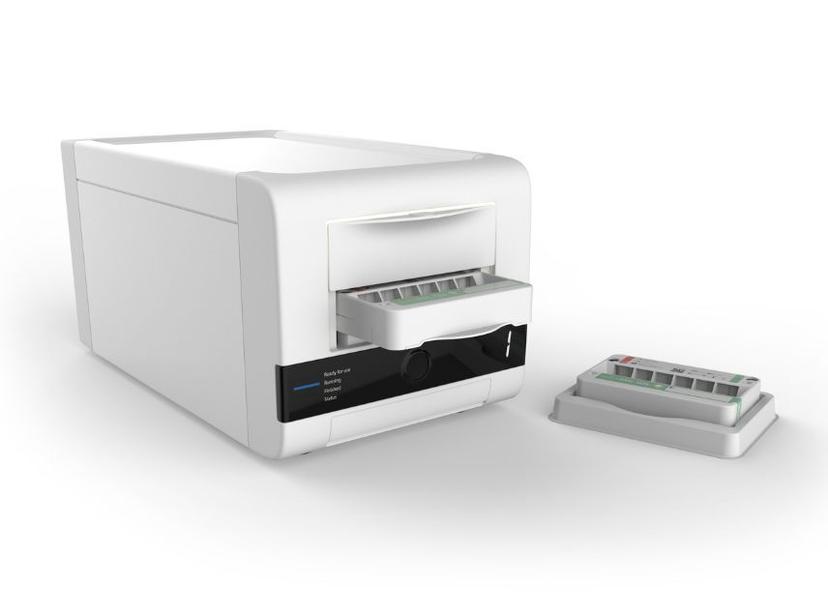
The QuickMIC® system is designed to deliver rapid antimicrobial susceptibility results, supporting diagnostic workflows that enable timely clinical action.
Acting on rapid AST requires collaboration between clinical microbiologists, treating clinicians, infectious disease physicians, antimicrobial stewardship teams and hospital pharmacists.
The strength of these connections can vary across a hospital. Intensive care and infectious disease teams may already have established channels for discussing urgent microbiology findings, while other clinical settings may depend more heavily on routine reporting systems.
Laboratory organisation must therefore reflect the clinical environment in which results are delivered. Introducing a sophisticated rapid test without ensuring that the appropriate team can receive, interpret, and respond to its findings limits the value of the technology.
The laboratory also retains an important interpretive role. Although an AST result provides essential evidence, its significance may depend on the organism, infection site, available therapies and condition of the patient. Direct communication can help clinicians consider the available options rather than treating the report as an isolated set of measurements.
“It is teamwork involving different players,” says Prof. Rossolini. “All of them should communicate during the translation of information into patient care.”
Susceptibility testing for cefiderocol and newer antibiotics
Newer antibiotics have expanded treatment options for some multidrug-resistant Gram-negative infections. Their introduction has also created a practical challenge because new agents are not always incorporated into routine automated AST systems as soon as they enter clinical practice.
“There is often a lag period in which the laboratory has difficulty testing new antibiotics,” explains Prof. Rossolini. “A system that incorporates new agents early can be very valuable.”
Cefiderocol illustrates why susceptibility data remain important even when an antibiotic has activity against difficult-to-treat pathogens. Prof. Rossolini highlights its potential role in infections involving problematic resistance mechanisms, including metallo-β-lactamase production, while emphasising that activity cannot be assumed for every isolate.
Access to reliable susceptibility data can help clinicians determine whether a newer agent represents an appropriate option. It can also support stewardship processes governing the use of specialist or restricted antibiotics.
AST capacity must therefore evolve alongside the treatment landscape. For laboratories, this means having access not only to faster methods, but also to clinically relevant antimicrobial panels and sufficiently broad, dependable results.
Designing clinical microbiology around patient urgency
Looking ahead, Prof. Rossolini believes that microbiology services should move away from treating every patient and diagnostic request in the same way.
“For critical care patients, you should have a workflow that ensures rapid diagnostic testing on a 24-hour basis,” he says. “If you have a test that provides a result in two or three hours, the laboratory should be open to deliver that result.”
A critically ill patient may require a different diagnostic pathway from a stable patient whose result is less time sensitive. Workflows could also be differentiated according to the pathogen identified and the treatment information required by the clinical team.
Delivering this model requires resources, specialist expertise and laboratory services organised around the urgency of the clinical decision. However, Prof. Rossolini cautions against adopting one model for every institution. Laboratories begin with different technologies, staffing structures and clinical requirements.
Implementation should build on existing capabilities and address the specific gaps preventing actionable information from reaching clinicians quickly. As antimicrobial resistance makes empirical treatment less certain, the value of rapid AST will depend not only on how soon a result becomes available, but on its breadth, reliability and ability to support clinical action.
Related products
Request Quote for All Products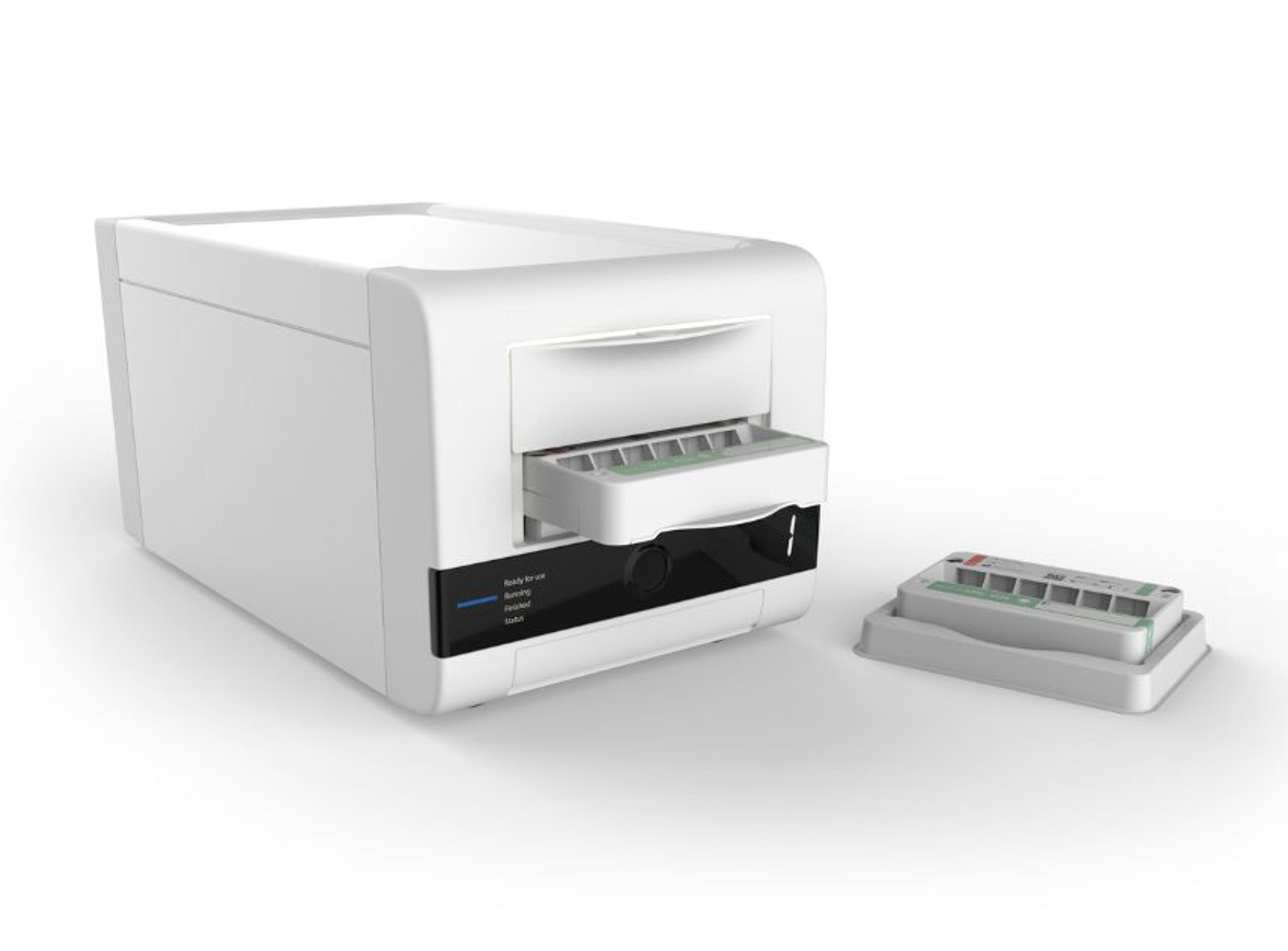
QuickMIC: Ultra-rapid antibiotic susceptibility testing
GradientechQuickMIC® is an ultra-rapid AST system, providing precise MIC values directly from positive blood cultures in 2-4 hours.
Links
Tags
Frequently asked questions
Show frequently asked questions
How does rapid antimicrobial susceptibility testing improve treatment of serious Gram-negative infections?
Rapid antimicrobial susceptibility testing (AST) identifies active antibiotics sooner, helping clinicians avoid inactive therapy and replace unnecessarily broad-spectrum regimens with targeted treatment. Prof. Gian Maria Rossolini emphasizes that clinically useful AST should provide reliable, sufficiently broad susceptibility data and support timely action.
Why must rapid AST focus on time to action rather than only analytical turnaround time?
A faster AST result has limited value if it remains unreleased, unread or unaddressed. Laboratories need to promptly review and communicate results through effective channels, while clinical teams must interpret them in the patient’s context. This workflow turns rapid results into actionable treatment decisions.
How can clinical microbiology laboratories support antimicrobial stewardship and critical care?
Clinical microbiology laboratories can support antimicrobial stewardship by coordinating with clinicians, infectious disease physicians and pharmacists, providing broad susceptibility profiles and enabling treatment de-escalation. Prof. Rossolini recommends 24-hour rapid diagnostic workflows for critical care patients, tailored to each institution’s resources, technologies and clinical needs.